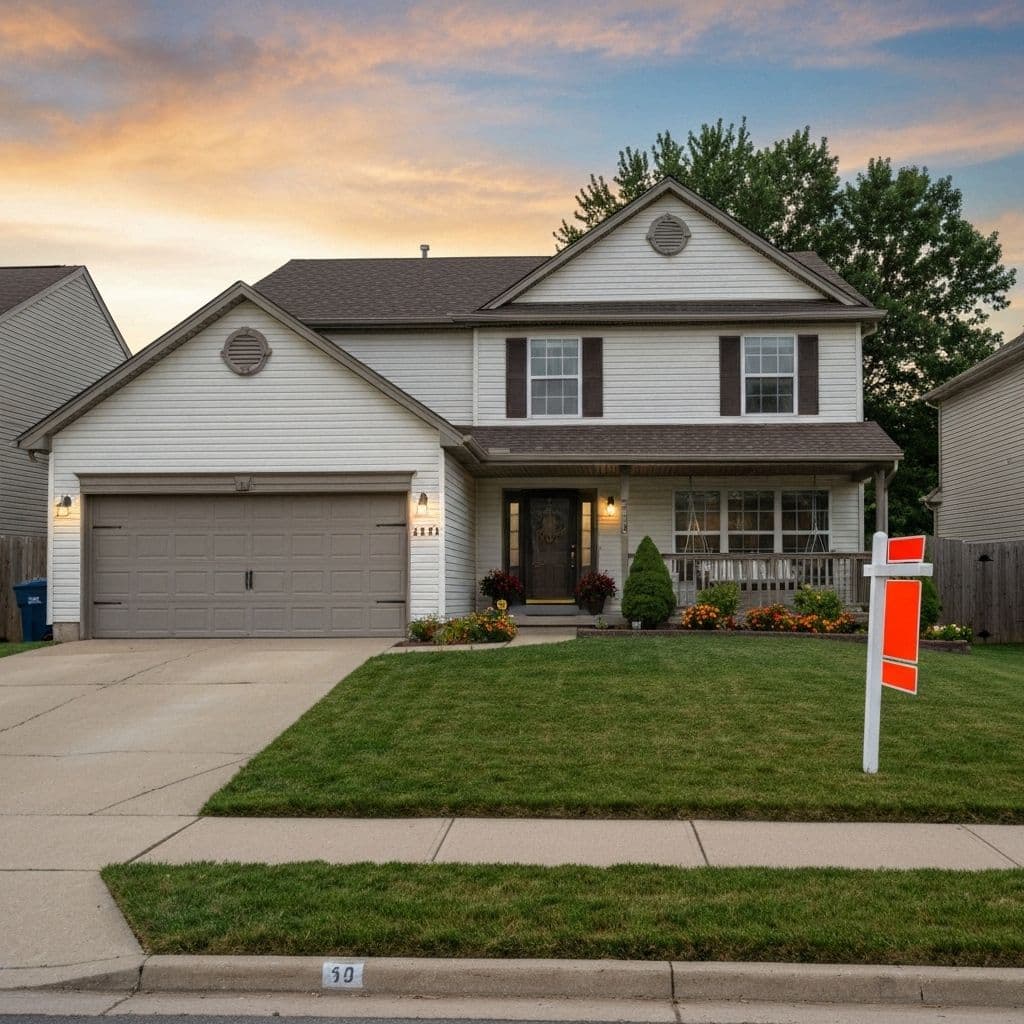
Should You Rent or Buy When You Move to the Suburbs?
The question keeps people up at night: Should I rent or buy? Add moving to the suburbs into that equation, and suddenly there's even more at stake. You're not just deciding between two financial options. You're deciding what kind of life you want to build.
Let's look at this clearly, without the pressure.
The Real Difference Between Renting and Buying
When you rent, you're paying for the right to live somewhere. When you buy, you're building ownership. Both are legitimate choices. One isn't morally superior to the other. Here's what matters: understanding what each actually costs, and what each actually gives you.
Renting: What It Actually Offers
- Lower upfront costs. Security deposit & first month's rent vs massive down payment.
- You maintain flexibility. Lease ends and you want to leave? Your options remain open.
- Maintenance is handled. The roof leaks? You call your landlord. That's it.
- The Trade-off: Rent can increase. You're not building equity. Limited ability to change your space.
Buying: The Full Picture
- You build equity. Your mortgage payment goes toward something you own.
- Predictable payments. Fixed-rate mortgages offer stable costs for decades.
- Make it yours. Paint the room, add a deck, renovate. Your choices, your investment.
- The Trade-off: Taxes, insurance, maintenance. A new roof is $8K-$15K. Find a reputable roofer to ensure the job is done right.
The Decision Framework
Stop asking "which is better." Start asking "which fits my life right now."
1 Rent if...
- You're uncertain about staying in the suburbs long-term
- You don't have savings for a down payment safely
- Your career might move you in the next 2-3 years
- You want to test an area before committing
- You're not ready for home maintenance
2 Buy if...
- You plan to stay in this town for at least five years
- You've saved enough for a down payment
- You want stable monthly housing costs
- You're ready to manage property decisions
- Building equity matters to your financial plan
The Math That Actually Matters
A rented apartment costs you money that goes to someone else. That's not good or bad. It's just the trade you're making for flexibility and lower upfront costs.
A bought home costs you money that builds your ownership. But it also costs you in taxes, insurance, maintenance, and repairs. A reliable estimate is 1% of the home's value annually for maintenance and repairs.
On a $450,000 home, 1% maintenance is $4,500 per year.
That's $375 per month on top of your mortgage.
Run the actual numbers for your specific situation. Don't use generic guidelines.
The Market Right Now
Connecticut's real estate market is stable but active. Interest rates are in the 6-7% range for mortgages, which is higher than recent years but manageable for many buyers.
Rental availability varies by town, but suburban Connecticut generally has options at various price points. You're not stuck.
National home values in context. Keeping Up With Inflation's Home Price Index summarizes Zillow Home Value Index (ZHVI) data for the typical U.S. home (all homes, middle tier, seasonally adjusted). Their tracker shows the national typical around $229,000 in 2019 rising to about $357,000 by 2026, roughly 56% higher, with a sharp run-up into 2022 and then a steadier plateau rather than a full retreat to older levels. That framing matters when you read headlines about the housing market: nationally, prices are still up a lot versus the late 2010s even after rate shocks.
How Connecticut and Greenwich compare. That ~$357,000 figure is a countrywide middle-market benchmark, not a Connecticut price. The state overall typically trades above the national typical. Zillow's Connecticut market data often puts typical home values around $425,000, so you are already in a pricier band before Fairfield County. Greenwich is on another level: the median home price sits around $1.2 million, several times the national typical and well above the state norm. Starter homes in surrounding towns like Stamford or Norwalk can often be found in the $400,000 to $600,000 range, closer to that Connecticut-plus-national picture, but still not cheap compared with most of the U.S. The key is knowing where to look and what you're actually getting for that price.
Neither market is dramatically advantageous right now. That means your personal situation matters more than trying to time a perfect market moment.
Sources: Keeping Up With Inflation, Home Price Index; Zillow, Connecticut housing market.
One More Thing: The Lifestyle Question
If you Rent
"Renting keeps you light. You're not tied down. You can move if something better comes up or if the suburbs don't work."
If you Buy
"Buying roots you. You're part of the community in a different way. You make decisions for the long-term. You participate in the town."
The Tax Reality
Connecticut has a state income tax that maxes out at 6.99%. When you compare that to New York's 8.82% or New Jersey's 8.97%, Connecticut comes out lower. That matters if you're moving from one of those states.
Property taxes in Connecticut are generally lower than Westchester County, NY, though they vary by town. Greenwich's property taxes are on the higher side within CT, but still highly competitive comparing apples-to-apples with NY suburbs.
Making Your Decision
Give yourself permission to start with renting if buying feels too uncertain. You can always buy later. There's no penalty for testing whether the suburbs fit first.
Talk to a mortgage broker
Find out what you actually qualify for and what the real monthly cost would be. No pressure, just clarity.
Talk to locals if renting
Ask them about lease terms, landlord reputation, and unexpected costs. Real stories matter more than averages.
Your Next Steps
The best choice is the one that matches your current situation and your actual plans for the next five years. Not someone else's best choice. Yours.
Ready to explore your options?

Ester Zolotnitsky
Greenwich Relocation Expert & Real Estate Consultant
Ester helps families transition from city life to the Connecticut coast. With deep knowledge of Greenwich neighborhoods, schools, and lifestyle, she provides honest, no-pressure guidance to help you find your perfect community.